Twelve kilometres a day: a rule for coast paths
Somewhere along the Cinque Terre — or was it the Camí de Ronda, they blur — we met a man doing thirty-four kilometres a day. He had the gear, the poles, the app with the elevation profile. He asked how far we were going and we said twelve, and he looked at us with the particular pity of a man who has confused a coastline with a treadmill.
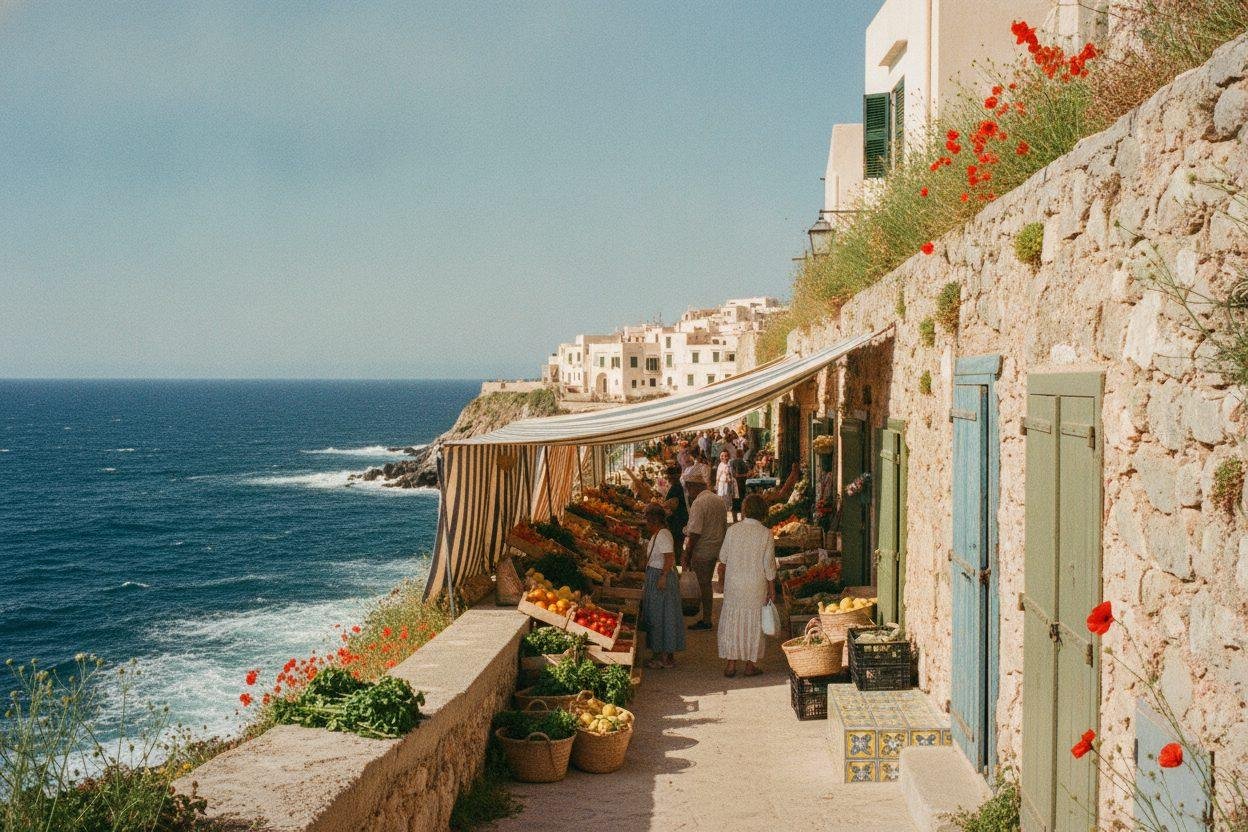
Twelve kilometres is not a limitation. It is a discovery: the speed at which a coast path stops being scenery and starts being a sequence of events. At twelve kilometres a day you have time to descend to the cove that has no name on the map. You can accept the second coffee. You can sit under the fig tree at the exact hour its shade means something, and let the fisherman finish his story about the storm of 2009, which improves with each telling and deserves the time.
Twelve kilometres is the speed at which scenery becomes a sequence of events.
The arithmetic of a good walking day
- Leave at eight, arrive by two. Heat is a schedule, not an obstacle.
- Swim mid-morning, when the coves are empty and the light is under the water.
- Lunch where you land. A walking day earns a long table.
- Never book the next bed more than a day ahead. The path edits the plan.
The thirty-four-kilometre man finished his trail in five days and, we assume, went home fit and unchanged. We took eleven days over the same ground and came home with a limoncello recipe, a standing invitation in a village of ninety people, and the fisherman’s story, which we now tell as our own. This is the entire argument for slowness, and it fits in one sentence: the path is not the distance. The path is what interrupts it.

written by Lena
Slow-travel writer, professional lunch-taker. I stay a day longer than the itinerary says and write down what happens.